
🚨 “An accidental fall from the Marella Explorer 2 was impossible!” 🚨
A shocking new statement has reignited the investigation into the mysterious disappearance of a 76‑year-old British passenger from the Marella Explorer 2, raising disturbing questions about what really happened before the man vanished overboard near Tenerife.
What we know so far
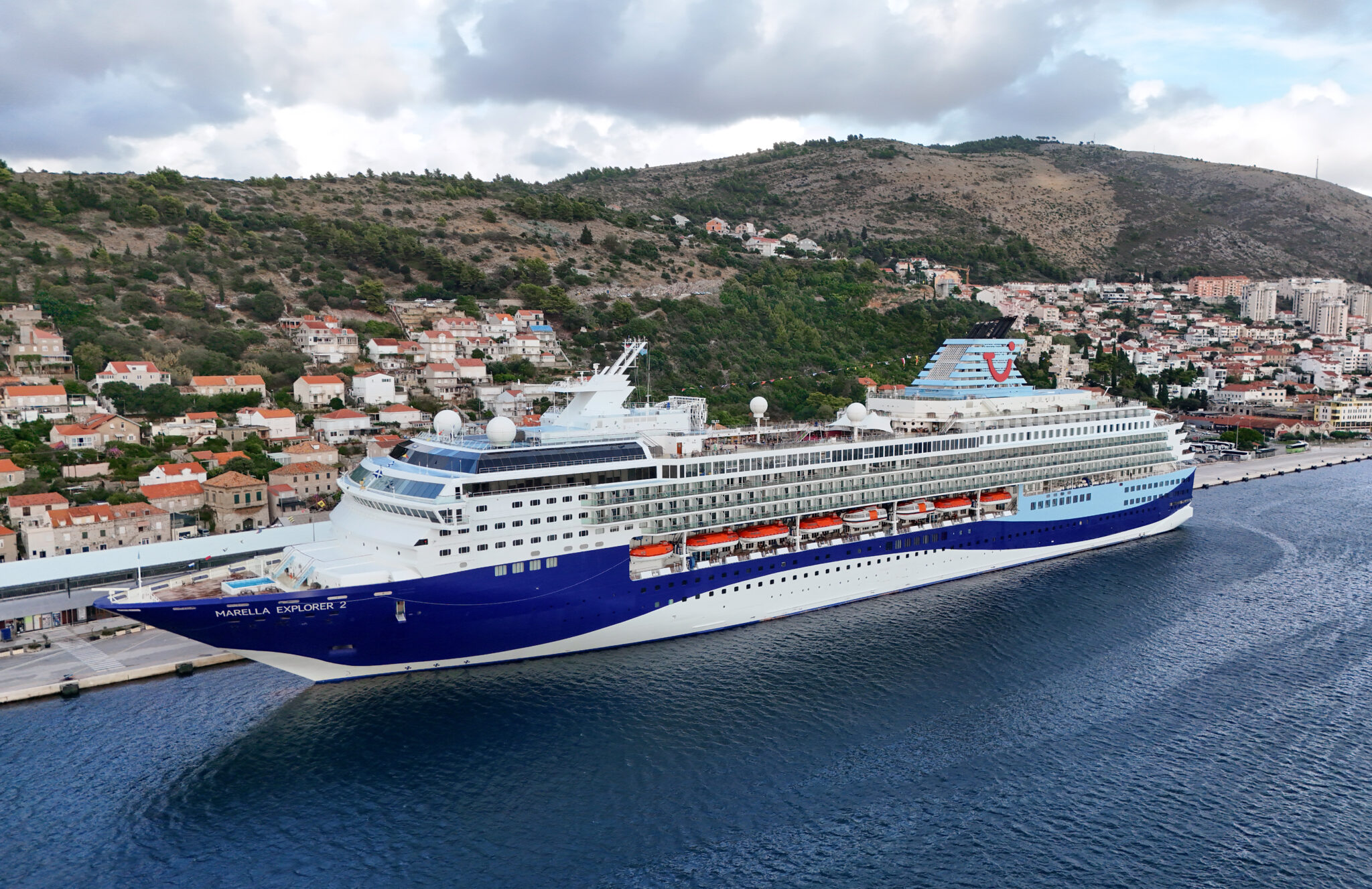
According to reports, on the morning of 27 November 2025, the Marella Explorer 2 — operated by TUI/Marella Cruises — sounded a “man overboard” alert at approximately 09:48 local time while sailing about 16.5 nautical miles northwest of Punta de Teno, off the coast of Tenerife. The missing passenger was last “seen entering the water,” the cruise line confirmed.
Spanish rescue authorities immediately launched a large‑scale search mission involving helicopters, patrol boats, and specialized rescue vessels. Marker buoys were deployed and shipboard CCTV footage was reviewed.
However, after several days of intensive searching, the operation was officially suspended on 1 December 2025 — the man remains missing, and no trace has been found.
The “Impossible Accident” Claim

In a recent public statement, an unnamed investigator declared: “An accidental fall from the Marella Explorer 2 was impossible.” Citing a thorough review of CCTV security footage and eyewitness accounts from passengers aboard, the investigator said nothing in the evidence supports the notion of a simple slip or accidental fall. Instead, the case has sparked “terrifying theories” about alternative scenarios — including foul play, or other non‑accidental causes — before the man went missing.
This assertion has sent shockwaves through the cruise community and among the many people following the tragic case worldwide.
Why falling accidentally from a cruise ship is extremely unlikely
Part of the reasoning behind the investigator’s conclusion rests on well‑established industry safety standards. According to maritime regulations — including those implied by the Cruise Vessel Security and Safety Act (CVSSA) — guardrails on passenger decks must meet certain minimum heights. Most cruise ships install railings that stand at least 42 inches (≈ 106 cm) above deck level.
More robust standards and guidelines — such as those referenced by safety‑conscious operators — often set railings even higher, or add plexiglass/solid panels below the top rail, making it virtually impossible for an adult walking normally to accidentally tumble over the side.
To fall “by accident,” a person would generally need to climb onto or over the railing, lean out dangerously, sit or stand on a chair or table near the edge — or otherwise commit a gross breach of basic safety behaviour.
Past data support how rare overboard accidents are: between 2009 and 2019, just 212 overboard cases were recorded among the millions of passengers and crew on cruise ships — a minuscule fraction of total sailings.
Moreover, modern cruise lines increasingly employ overboard‑detection systems — thermal cameras, radar sensors, CCTV — to catch incidents the moment they happen, ensuring prompt response.
What this means for the investigation
Given those safety barriers and the lack of any CCTV footage or credible eyewitness report showing a slip or accidental tumble, investigators argue that the missing man’s disappearance is unlikely to have been a simple accident.
Instead, the public statement’s “terrifying theories” hint at more troubling possibilities: foul play, involuntary push, medical emergency followed by fall, or other as‑yet unspecified cause. Authorities have not confirmed any of these, but the insistence that an accidental fall was “impossible” significantly shifts the narrative — from tragic accident toward potential criminal or external causes.
That shift in tone may also open up new avenues for search and inquiry. For example: re‑examining CCTV from other parts of the ship, re‑interviewing passengers and crew, checking for signs of struggle or suspicious behaviour, and reviewing logs of who had access to certain decks at the critical time.
Why the height and design of the railings matter
Railings and guardrails are not just bureaucratic checklist items — they are the first line of defence against overboard accidents. At 42 inches (≈106 cm), for an average adult, that height sits roughly mid‑torso. It is physically improbable — under calm conditions — for someone to accidentally tumble over such a barrier without actively trying.
If deck railings are up to standard, with no missing sections or obvious damage, and if there is no evidence someone climbed, sat, or leaned dangerously, it is reasonable — as the investigator concluded — to consider an accidental fall effectively ruled out.
Conclusion

The disappearance of the 76‑year-old British man from the Marella Explorer 2 remains one of the ocean’s enduring mysteries. Now, with an investigator publicly stating that an accidental fall is “impossible,” the case enters a new, darker phase — one in which simple misfortune gives way to serious suspicion.
Unless new evidence emerges — CCTV footage, eyewitness confession, or physical trace — the cruise community may never know what truly happened that morning off the coast of Tenerife. But one thing is clear: according to current design standards and the available evidence, the man’s fall was far more likely than not not a mere accident.


